
Delaware County Civil Docket Searches
MyCase is Indiana's statewide public Odyssey search. A party-name query works when you lack the cause number. An exact number is better. Pick Delaware County, then trim the results with case status, filed date, and civil case type. An attorney search helps when you know the lawyer.
Missing case? Call Rick Spangler, Delaware County Clerk, at 765-747-7726, or go to 3100 South Tillotson Avenue in Muncie. Court-specific clerks can confirm an assigned court and setting. A written request works for an identified public record. Remember that Indiana e-filing submits papers; it is not a way to view the public CCS.
- Search the exact cause number when available.
- Otherwise enter a party name and choose Delaware County.
- Filter by civil type, status, or filing date.
- Open the matching Chronological Case Summary.
- Ask the clerk for a missing document or certified copy.
Delaware Civil Case Codes
The cause number encodes court and case type. Indiana codes include PL for plenary civil, CT for civil tort, CC for civil collection, MF for mortgage foreclosure, MI for civil miscellaneous, SC for small claims, and several family categories. A code narrows the subject. It does not summarize the dispute.
Take 18C01-2502-PL-000456. That points to Delaware County, Circuit Court 1, a February 2025 filing, the PL type, and a sequence number. Use a real number from your filing or notice for docket search. Results should match party, court, type, and filing year.
The final sequence separates filings within the same court and category. Some searches skip leading zeroes and hyphens. The stored number is still best for a clerk request. Copy it from the case header after you locate the match. A transfer can create a new number, so record both references and ask which file holds the public document you need.
Civil Dockets: What They Show
The Chronological Case Summary lists events by date. Complaints, service activity, appearances, motions, orders, settings, judgments, and enforcement events all appear there. Some documents may be linked. Older images and remotely restricted documents can be missing even when the filing event is public.
| Cause number | County, court, filing period, type, and sequence. |
|---|---|
| Parties | Public plaintiff, defendant, petitioner, or respondent names. |
| Filings | Complaint, answer, motion, notice, and other public events. |
| Settings | Conference, motion hearing, bench trial, jury trial, or review. |
| Outcome | Dismissal, judgment, settlement-related order, or other disposition. |
An event title is not the document. Read its date and any linked order. A judgment entry may be followed by payment, garnishment, satisfaction, or appeal, so the later lines can matter as much as the first.
Delaware Civil Allocation Rules
Delaware County's five circuit courts share general jurisdiction. Local rules assign categories and balance the caseload. Many civil and family matters land in particular courts rather than one undivided courthouse list. The assigned court is therefore a key search field.
The 2025 Delaware local rules govern assignment and procedure. Court identifiers 18C01 through 18C05 match the five current circuit courts. Old Superior Court identifiers in Odyssey are historical, not proof of a current division.
The local code list shows the range behind the word civil. PL marks plenary civil work. CC and CT mark collection or contract and tort categories. MF means mortgage foreclosure. SC and EV separate small claims and eviction. Probate, guardianship, trust, protective-order, domestic-relations, and mental-health categories carry their own codes. They may have different public-access limits. A code routes and manages the case; it does not summarize evidence or settle the result.
The distinction matters when two parties share more than one case. A name search can return a collection claim, a family matter, a small claim, and a protective-order file. Each has its own cause number. Compare filing year, case code, assigned court, and party roles before choosing a result. A plaintiff in one file may be a defendant in another. Open each MyCase card and check it rather than treating the cards as interchangeable name matches.
Assignment can shift through transfer, reassignment, consolidation, or a change of judge. The CCS preserves those events. Search the complete number on the newest order and note any prior number. An old Superior Court identifier is still useful to the Delaware County Clerk as historical search information. Today's five-circuit structure controls present routing. Archived records can keep the identifier from their filing date.
What Cases Fill the Civil Docket
The civil docket holds contract and collection claims, tort actions, property disputes, foreclosures, injunction requests, and civil miscellaneous filings. Small claims run on a simpler track under the distinct SC type. Public family cases also carry civil-style event histories, though sensitive data and some documents may be protected.
| Case group | What the CCS may track |
|---|---|
| Plenary or tort | Pleadings, discovery motions, hearings, trial, judgment. |
| Collection | Claim, service, judgment, garnishment, satisfaction. |
| Foreclosure | Complaint, appearances, orders, sale-related events. |
| Small claims | Claim, service, initial hearing, judgment, collection steps. |
| Family | Public petitions, settings, and orders subject to restrictions. |
The label on a case mainly steers your search toward the right docket. It won't spell out every allegation, and it proves nothing about the merits of a claim.
Delaware Small Claims Path
The county publishes a small-claims packet with local forms and instructions. The official Delaware County packet is a useful starting source before you file.
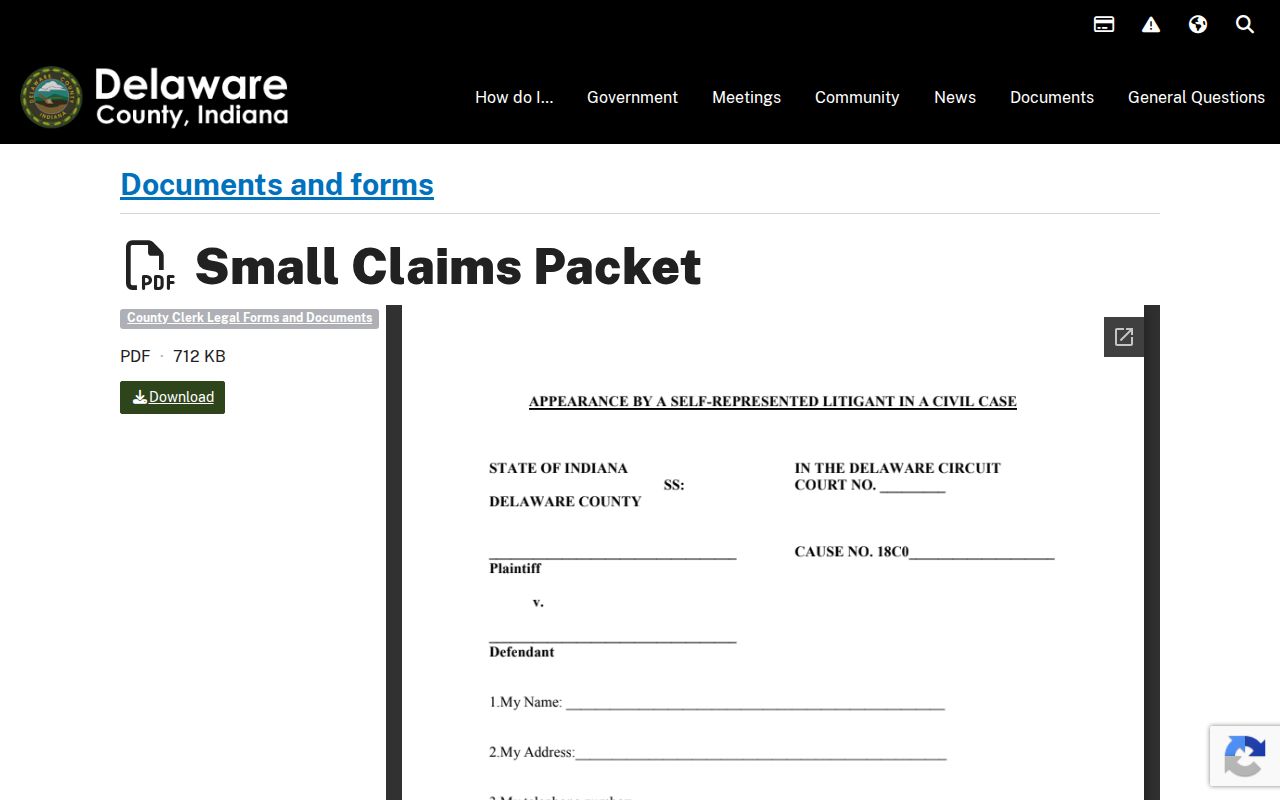
A filing packet shows the legwork that happens before anything lands on the public docket. Draft the claim, file it with the clerk, arrange service. Only after filing does the CCS begin recording case events. The packet itself is not a case record. It cannot tell you how a dispute actually turned out.
Hearings on the Civil Docket
Civil settings come in many flavors. A docket date might be a status conference, motion hearing, pretrial conference, bench trial, jury trial, damages hearing, or review. Treat no listed date as the final trial without checking. Setting type, the latest order, the courtroom, and the assigned judge give the context you need, and Circuit Court 1's official page adds local schedule detail for Delaware County.
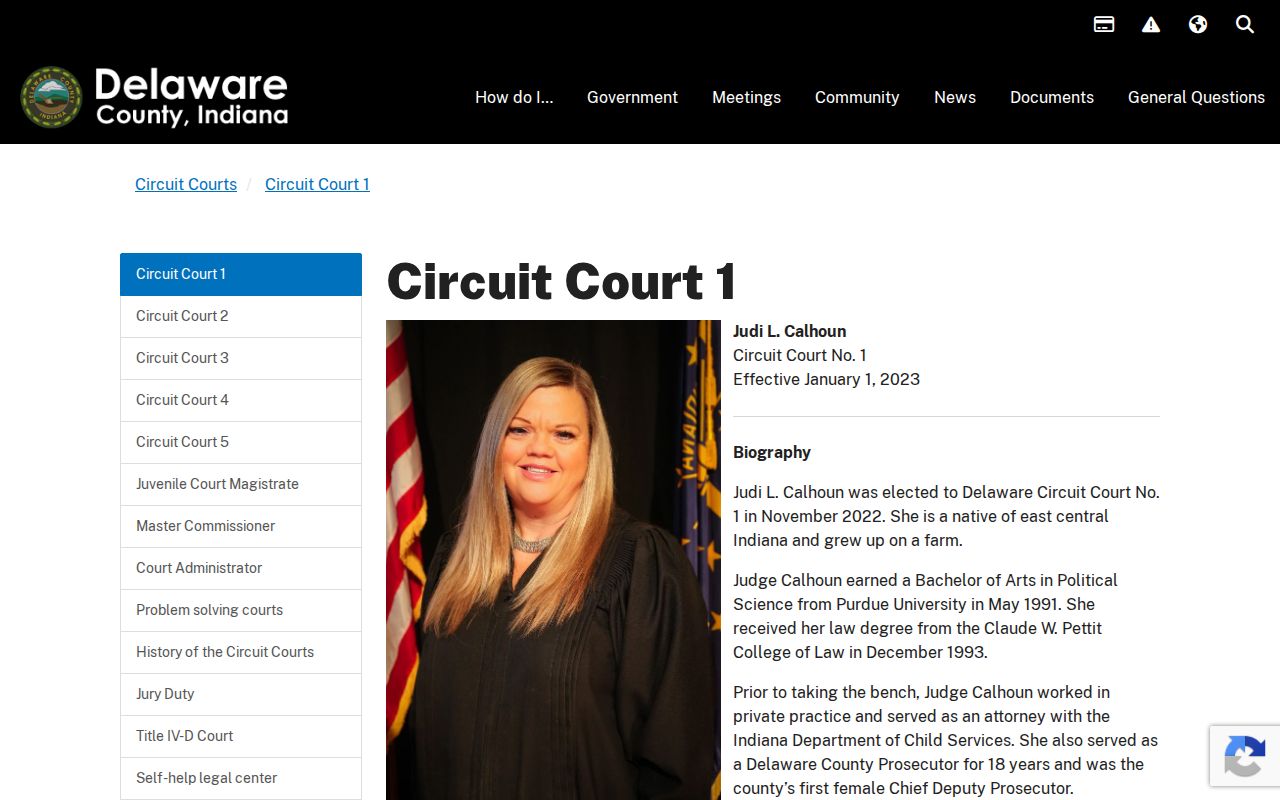
The public court page can point you to the right division. Even so, a party's date is controlled by the latest CCS entry and any notice issued. Remember that a continuance typically adds a new order and setting rather than erasing the old one.
Mixed Settings in Circuit Court 2
Circuit Court 2 posts criminal, jury, and non-contested settings together. The court's schedule page shows why a weekday label by itself never tells you what kind of case is set.
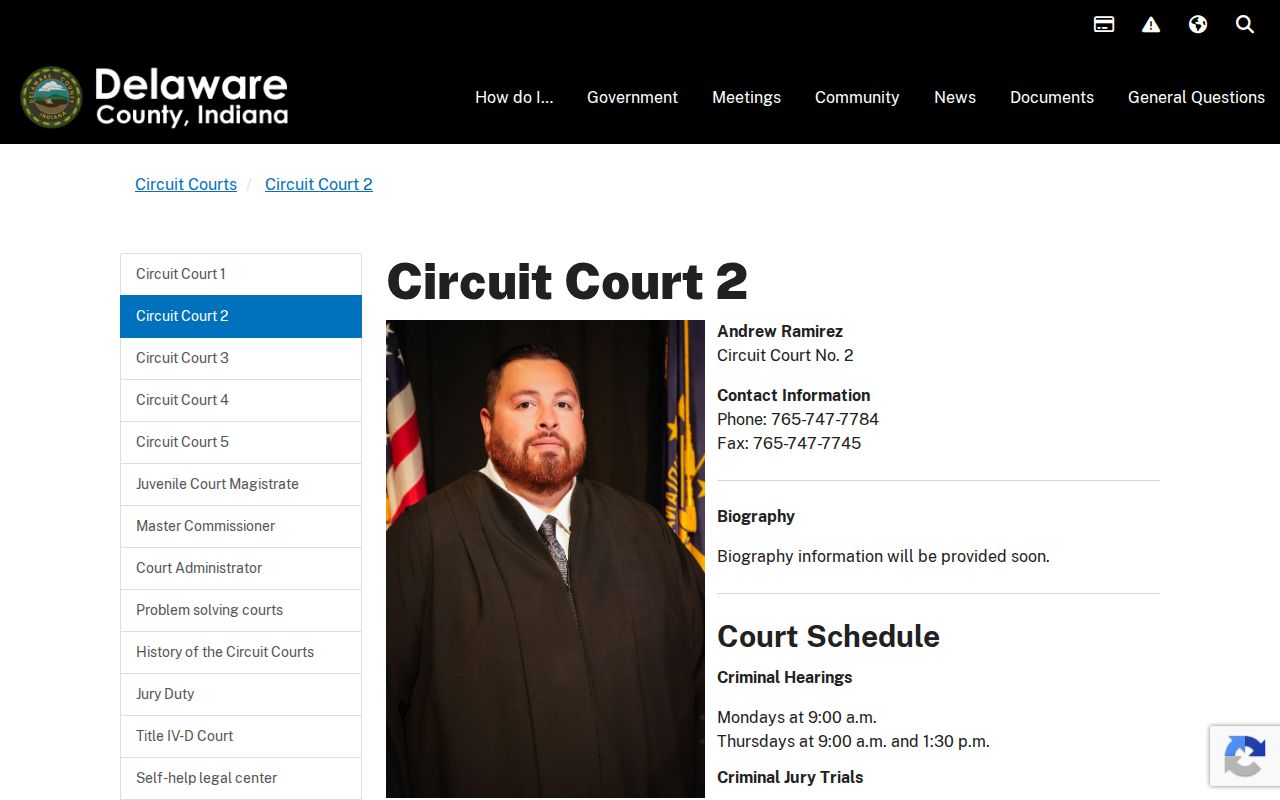
Check the assigned cause number and the setting text to tell a civil hearing from other court work. A general schedule only gives context; the case-specific order supplies the date, time, and purpose. When the two conflict, contact the court clerk.
Who Can See Civil Dockets
Indiana's Rules on Access to Court Records start from a presumption of public access, with listed exclusions. Sealed cases, confidential filings, juvenile material, and protected personal data may be hidden or redacted. Note that remote access can be narrower than what you can view in person at the clerk's office.
No result is not a final answer. Check spelling, former names, court, type, and year, then ask the clerk about lawful access to an identified record.
Two frameworks govern this. The Indiana Access to Public Records Act reaches public bodies broadly, while the judicial access rules control case records in detail. A court order can also restrict a particular filing, so ask about process rather than confidential content.
Official Delaware Civil Copies
Delaware County's copy page charges $1 per page plus $3 to certify each document. Certification is the clerk's formal confirmation. A CCS download or screen print may inform you, but it is not certified. Give staff the cause number, document title, and filing date to cut delay.
Keep any request narrow. "Every document about a name" helps less than a cause number, the assigned court, a filing date, and the named order. If you lack the number, run a MyCase lookup first for the likely case. Then confirm the match. Before sending funds, ask whether the document is public. Also ask how many pages it holds and what payment or pickup the clerk accepts.
Civil files also come in distinct layers. The CCS lists events. Pleadings state each party's filed positions. Orders show what the judge directed. A judgment records a result, and a later satisfaction can show a money judgment was resolved. Hearing audio or a transcript runs through a court-reporter process. Request the layer that answers your actual question.
In a Delaware County small-claims file, the claim, service entry, setting, judgment, and collection events can each be separate items. Naming the exact one prevents an incomplete request. For a family or protected matter, ask what may lawfully be released. Do not assume every CCS line or document image is open online.
For transcripts, use the court reporter or clerk route the court identifies. For missing images, separate the public event line from the document behind it. For case status, read the newest entries and verify with the assigned clerk. That care turns a Delaware County civil docket search into a reliable request for the actual record.