
How the Delaware County Court Calendar Works
No single Delaware County calendar covers every case. That is the first thing to understand. The five circuit courts put different schedule details on their own county pages, and case-specific dates live in Indiana Odyssey Public Access, which most people call MyCase. Muncie City Court runs a separate local docket with its own contact route. Whichever court is assigned to a case controls its setting.
So a good Delaware County court docket check pulls three facts together: the cause number, the court identifier, and the newest setting entry. A weekly schedule can tell you when a judge usually holds jury trials or reviews. It cannot prove your case is still set. Orders, resets, and cancellations arrive after general schedules go up, and those entries change the answer for any one case.
MyCase as Delaware's Date Layer
For a Delaware County court docket search by date, MyCase is the main public tool. Start with a cause number if you have one. A name search also works. Confirm the party, case type, filed date, and court before trusting the match. Then open the Chronological Case Summary and read backward from the newest entry that matters.
The CCS lists hearings, trials, conferences, sentencing, reviews, and any later orders that reset them. Document links vary by case. MyCase itself warns that it is not the official record. Older or restricted content may be missing. Treat it as the way to locate a setting. For an urgent or disputed court date, verify with the clerk.
Delaware County Court Date Lookups
Each access channel serves a purpose in a Delaware County case lookup. Online search is the fastest. The assigned court's clerk can confirm a public setting by phone, and the Delaware County Clerk counter at 3100 South Tillotson Avenue in Muncie routes record questions in person. A written request can seek a public order or notice. General court pages add schedule context. The county publishes no separate daily printed calendar.
- Locate the cause number on the latest notice.
- Search it in MyCase and confirm Delaware County.
- Open the CCS and find the newest setting or reset.
- Compare the date, time, court, and setting type with the notice.
- Call the assigned court clerk when any detail conflicts.
Rick Spangler, the Delaware County Clerk, takes calls at 765-747-7726 for countywide record routing. Each court page lists the direct clerk team for its division. When you know the assigned court, call that division first.
Circuit Court 3 Schedule Context
The official Circuit Court 3 page posts schedule and contact details. It serves one of Delaware County's five trial courts.
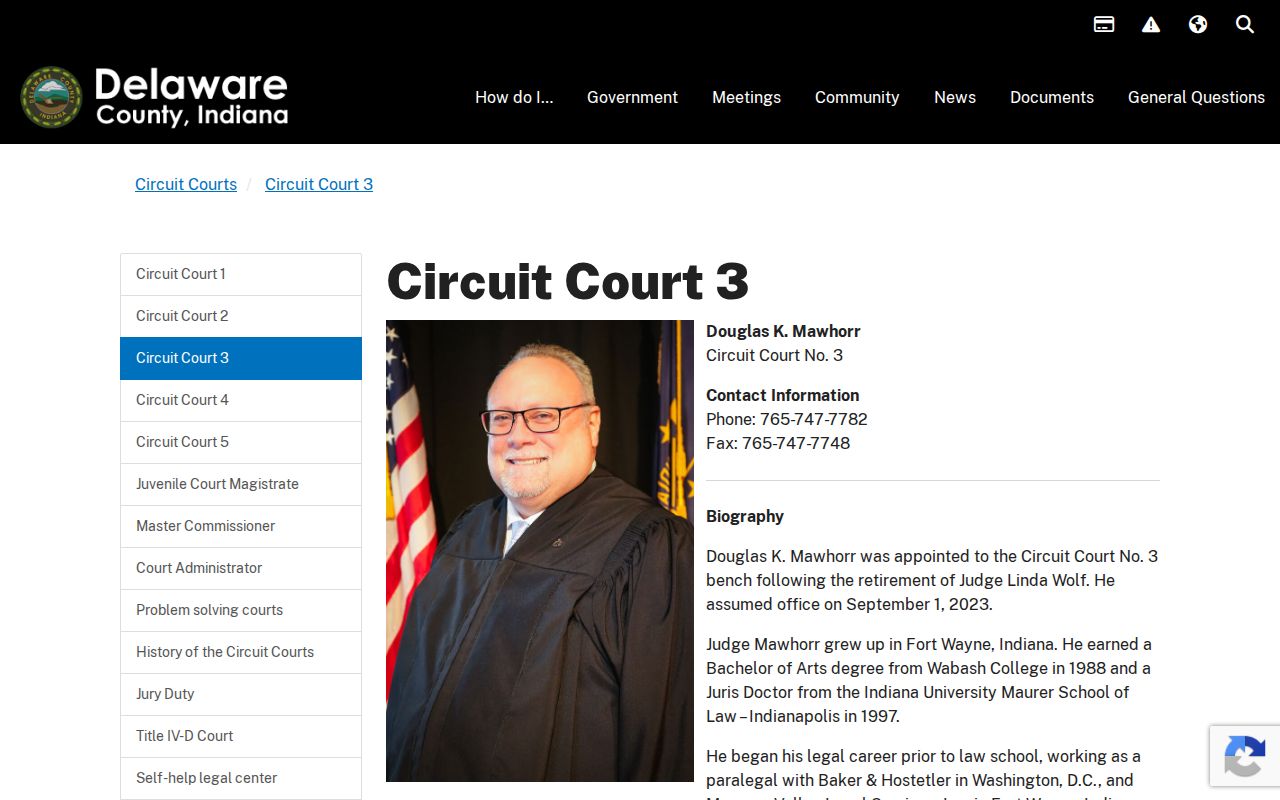
The page shows the division and its routine. It cannot replace the latest setting in a named case. A Delaware County court can shift its daily work through an order or continuance. An emergency closure or judge-specific direction can do the same.
Circuit Court 3 lists its own clerk line, 765-747-7782, in the current court directory. Use that division-specific route when the cause prefix points to this court. Give the clerk the cause number and setting text, not just a party name. That separates a hearing question from a copy or transcript request. Also check the date of the newest CCS entry. An old setting can stay visible after the court enters a replacement date.
Court Settings: What Each Field Means
Every setting on a docket is a cluster of fields. Each answers a different question. The date tells you when; the time tells you which session. Court and courtroom show where the case sits. The judge field names the judicial officer when one is listed. The setting type gives the purpose of the hearing. So read all the fields together before you plan a trip to the courthouse.
| Date | The scheduled day, subject to later order. |
|---|---|
| Time | The session start or case-specific appearance time. |
| Court | The assigned circuit or city court identifier. |
| Room | The courtroom or hearing location when listed. |
| Judge | The judicial officer assigned for that setting. |
| Type | Initial, pretrial, motion, trial, sentencing, review, or other event. |
Labels matter here. A "pretrial" date is not the trial. A "review" usually checks whether someone followed an earlier order. An "initial hearing" opens a criminal case without deciding anything in it. When the docket text is unclear or undefined, ask the court clerk what it means.
Delaware Setting Terms in Plain English
Short labels save space on a Delaware County CCS docket, but they can confuse a reader fast. What each term means depends on the case and the order around it, so treat the list here as a plain-English guide to common functions rather than promised outcomes.
- Initial hearing
- An early criminal appearance covering charges, rights, counsel, and further dates.
- Pretrial conference
- A status setting used to manage issues before trial.
- Bench trial
- A trial decided by the judge rather than a jury.
- Jury trial
- A trial set for jury selection and evidence.
- Review hearing
- A later check on compliance, progress, or a prior order.
- Non-contested setting
- A session for matters not expected to involve a live dispute.
A bare CCS code tells you little. Open the public order behind it. If nothing is linked, ask the clerk for that document rather than guessing from a label.
Division context helps in Delaware County. Circuit Court 2 posts criminal, jury, and non-contested schedule context. Circuit Court 4 lists Forensic Diversion and Veterans Court work. Circuit Court 5 covers criminal, jury, general, and small-claims sessions. Those recurring patterns make a docket easier to read. Still, none of them fixes the final setting for one cause number.
A setting can describe format too, not just purpose. The operative order may say whether the hearing is in person, remote, or converted from one format to another. MyCase can list the event while leaving out instructions buried in the document. Get the order when the courtroom or deadline matters. Never assume remote appearance is allowed because an older entry or another case on the same docket said so.
Read the docket in sequence. Find the original setting first. Then check for a motion to continue, the order granting or denying it, and any replacement date. A filed motion does not move a hearing. Only the judge's order controls. If the CCS just says a hearing was held, that line is not a transcript and may leave decisions unstated. The assigned clerk can point to the public order; the court reporter handles the separate hearing record or transcript.
When a Delaware Court Date Moves
A continuance postpones a setting. A reset places it on a new date. A cancellation drops the listed event, sometimes because another order resolved the need for it. The CCS usually keeps the old event visible and adds the later action, so a stale date can linger lower in the history.
Watch for words like vacated, continued, reset, cancelled, or converted. Then find the order date and new setting. A blank calendar slot is not a dismissal. The case can stay open with no hearing set, and a disposition can end the main claim while review or collection events keep going.
Best check: compare the newest CCS entry with the latest court notice, then call the assigned clerk if they do not agree.
Delaware Calendar Data Context
The Indiana trial and probation statistics page publishes 2025 provisional and earlier annual reports.
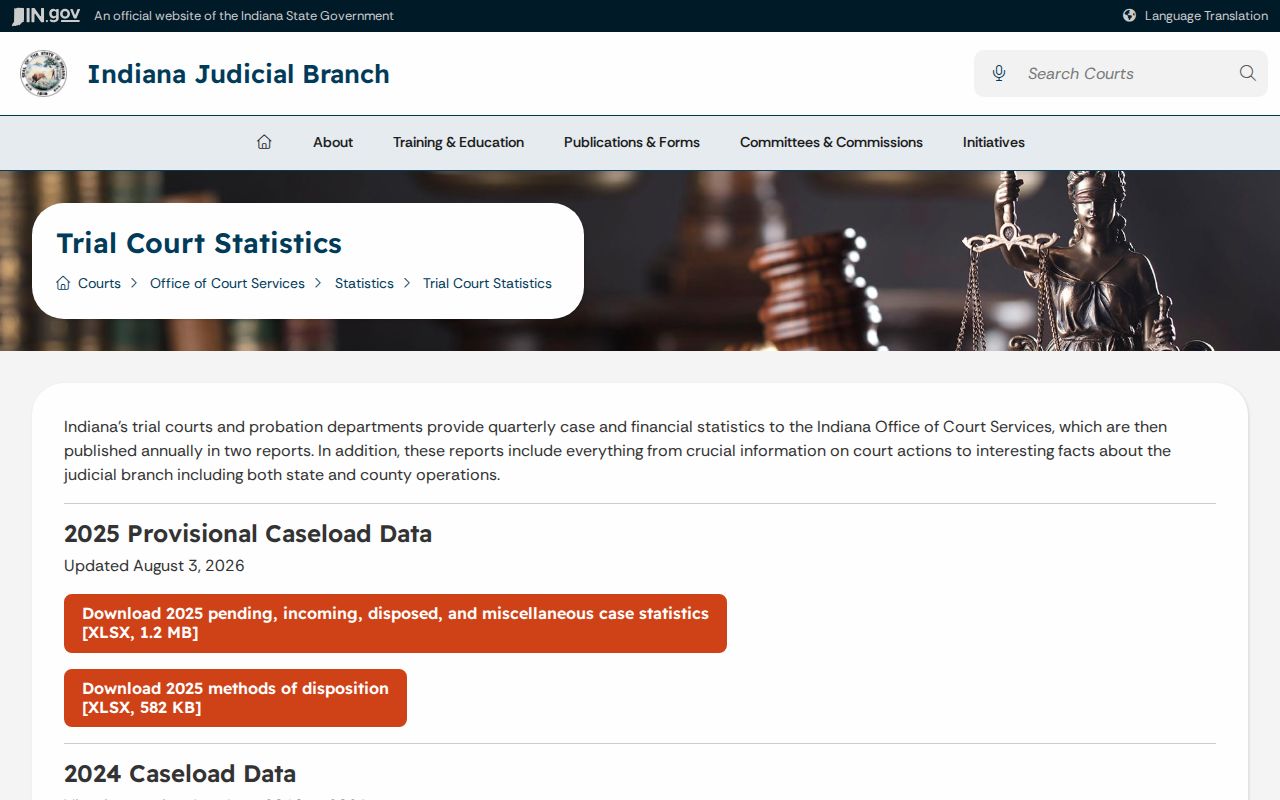
Caseload totals explain why a Delaware County court runs several kinds of sessions. They count incoming, pending, and disposed work by category. No statistic can predict a date in your case.
The party still needs the individual CCS and the court notice. For statewide figures, use the Public Courts statistics application. It reports caseload data through its own separate interface.
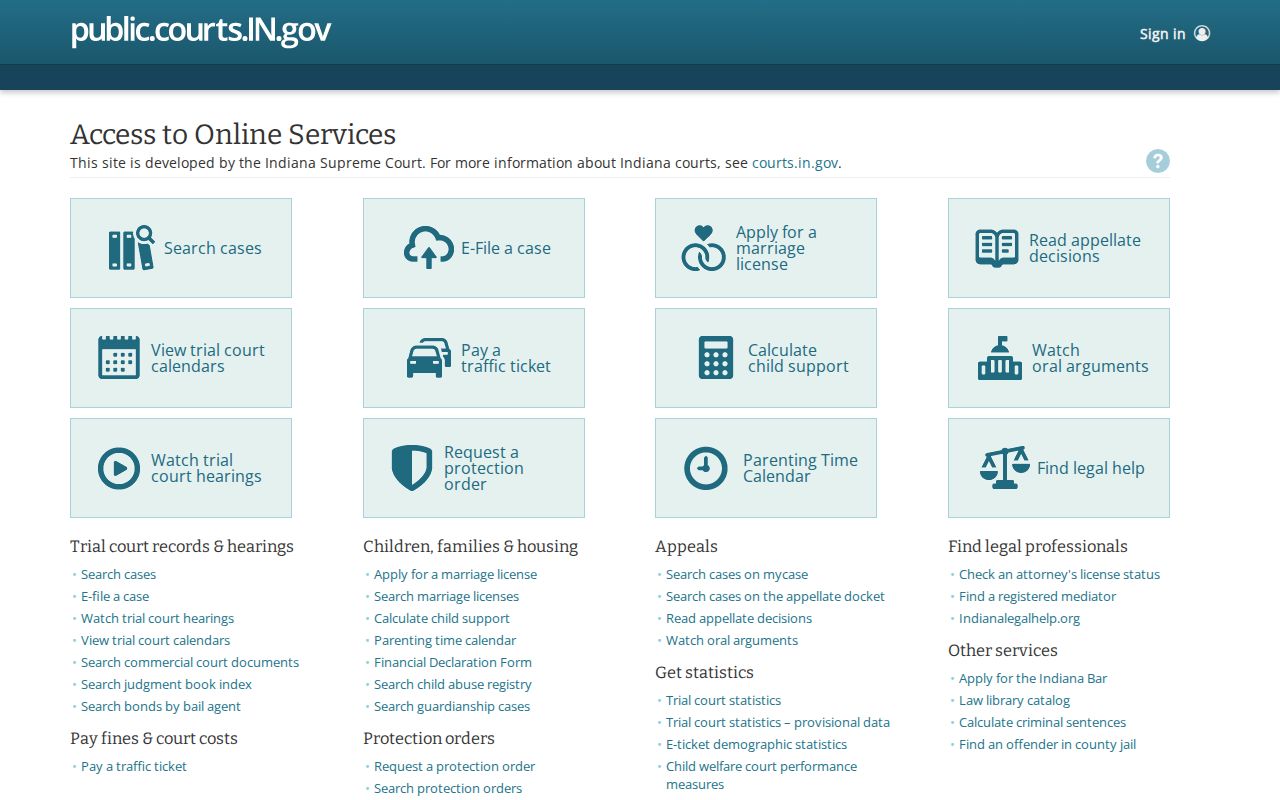
This view is not MyCase. It keeps statistical research separate from private case details, while MyCase remains the public case-search interface for locating an individual setting.
Missed Settings and What Comes Next
Act fast after a missed setting. Scan the newest CCS entries for an order, warrant, default, dismissal, or replacement date. Call the assigned court clerk with the cause number and ask what public order was entered and how to get it. The clerk explains procedure but cannot give legal advice.
Do not assume the case was simply reset. Consequences depend on the case and order. Criminal, traffic, civil, and small-claims matters can follow different paths after a missed appearance.
Contact counsel too, if one appears in the case. Keep proof of any closure, emergency, or communication that might matter. Do not email sensitive facts unless the court directs it.
Verify Delaware Schedule Details
MyCase is broad and easy. The clerk's official record still controls. A schedule page shows a pattern, not a promise. A CCS is a dated index, not always the full order. A mailed or electronic notice can go stale after a continuance.
Delaware County's five circuit divisions publish schedule detail at different levels. That gap makes the cause number matter more. Write down the court prefix and the newest docket-entry date before calling. Staff can then separate a weekly session from a special setting and pull any public reset order tied to the case.
For a solid Delaware County court schedule check, match cause number, court, date, time, and setting type. Then read the latest entry. Call the assigned clerk if time is tight. Ask for a copy of the public order when the wording matters. That chain cuts the risk of arriving at the wrong time or place.