
Delaware County Criminal Docket Searches
Open Indiana Odyssey Public Access, or MyCase first. It covers public Odyssey cases from Delaware County Circuit Courts 1 through 5 and Muncie City Court. Type the exact cause number if you have it. A party name works too. Attorney, court, status, and filing-date filters help when the name is common.
Online search not turning anything up? Go local. Call or visit the Delaware County Clerk at 3100 South Tillotson Avenue in Muncie, or contact the clerk team for the assigned circuit. A written request should name the cause number and the item you want. The clerk counter and court phone are the official local fallbacks. Remember that e-filing submits documents; it is not the public search screen.
- Choose a case, name, or attorney search.
- Enter the cause number or enough name detail.
- Filter for Delaware County and criminal case type.
- Open the match and read its Chronological Case Summary.
- Ask the maintaining clerk for missing or certified material.
Delaware Criminal Cause Numbers
An Indiana cause number packs place, court, case type, year, and sequence into one string. Take 18C04-2501-F6-000123. County 18, Circuit Court 4, a January 2025 filing, an F6 case type, and a sequence at the end. Use the number printed on an order or notice rather than building one from memory.
Current county and Odyssey sources show 18C01 through 18C05 for the five circuit courts. They also list 18H01 for Muncie City Court. Old material may still carry archived Superior Court rows or matters from the abolished Yorktown Town Court. A historical identifier does not establish a current court.
Criminal Dockets: What They Show
Indiana names the docket sheet a Chronological Case Summary, or CCS. The clerk describes it as a dated list of motions, orders, and hearing summaries. Think of it as an index and event history, not always the whole official file. A filing can appear on the list. Its image may not be available online.
| Cause number | County, court, date, type, and sequence. |
|---|---|
| Parties | Public party and attorney names. |
| Charges | Filed counts, levels, and amendments. |
| Settings | Initial, pretrial, trial, sentencing, and review dates. |
| Events | Orders, bonds, pleas, warrants, and dispositions when public. |
A charge is an allegation, not a finding. A hearing line may only record that a setting occurred or moved. Read the later entries and the final disposition before treating the first event as the outcome.
Delaware Criminal Caseload Snapshot
Indiana's 2025 provisional workbook reports 1,015 new felony entries for Delaware County Circuit Courts. It also lists 409 misdemeanors. Level 6 felonies add 204 more, and criminal-miscellaneous entries add 405. On the disposition side, it lists 1,078 felony, 405 misdemeanor, 215 Level 6 felony, and 442 criminal-miscellaneous closings. These are court workload totals, not records about a person. The Indiana trial statistics source adds statewide context and prior years.
The numbers argue for tight filters on court and case type. They cannot prove delay in one case. Disposed cases end in varied ways.
Case-type labels carry practical weight in a search. Delaware local materials use F1 through F6 for current felony levels, while older cases may carry the former FA through FD classes. MC marks miscellaneous criminal work, and RF appears in local assignment material for firearm-related proceedings. Each label describes a filing category only. It does not state that charged conduct was proved. Do not stretch it beyond the current court legend without checking the source.
Assignment is more specific than a countywide total suggests. Delaware rules rotate many new criminal filings between Circuit Courts 4 and 5 when no felony is already pending. Juvenile categories follow other allocations. Does one division show no match? Use the countywide MyCase filter or the exact cause number before concluding the matter is absent. Transfers, reassignment, and a change of judge can add another court reference while the case history survives.
Incoming and disposed totals answer workload questions, never how long a named case should take. A disposition may be a dismissal, plea judgment, trial judgment, transfer, or another closing event. Sentencing, probation, restitution, or review entries can follow. To read one Delaware County criminal docket, start with the aggregate figure. Step back to the individual CCS. Follow events in date order. Request the controlling public order when an event label alone is unclear.
Criminal Case Stages on the Docket
A CCS often starts with filing and assignment. From there it may list an initial hearing, counsel, bond action, pretrial settings, motions, plea or trial events, and disposition. Sentencing and compliance reviews may follow. Not every case uses each stage.
Docket flow: Charge Filed › Initial Hearing › Pretrial › Plea or Trial › Disposition › Sentencing
A reset does not erase an earlier setting. The CCS keeps the old event and adds an order or new date. That sequence tells movement from closure. When paper and online information seem to differ, confirm the latest notice.
Delaware Specialty Criminal Settings
Delaware County Circuit Court 4 publishes settings tied to its Forensic Diversion Drug Court and Veterans Court. The official Circuit Court 4 page supplies that schedule context.
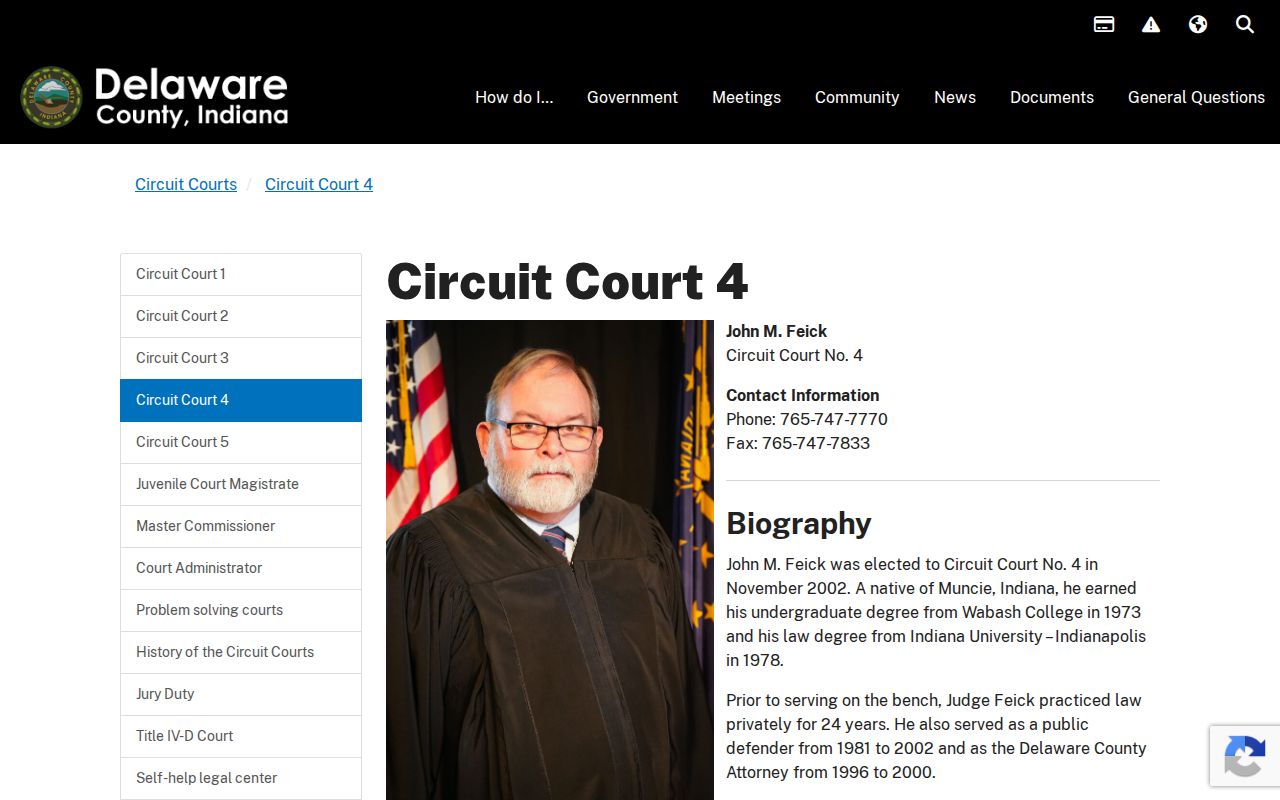
The CCS and the newest notice govern what a participant must actually follow. Specialty dockets can involve screening, monitoring, testing, and repeat review hearings. A public docket entry may list the setting alone, with protected treatment details left out.
Delaware County Criminal Docket Courts
Five circuit courts sit in Delaware County, and local rules divide the workload among them. When no felony is pending, criminal filings rotate between Circuit Courts 4 and 5. Every new matter enters through the Delaware County Clerk. The clerk assigns a uniform cause number. The case then joins the court docket system.
The Circuit Court 5 page posts an extra resource. It adds a local criminal and jury schedule for the county.
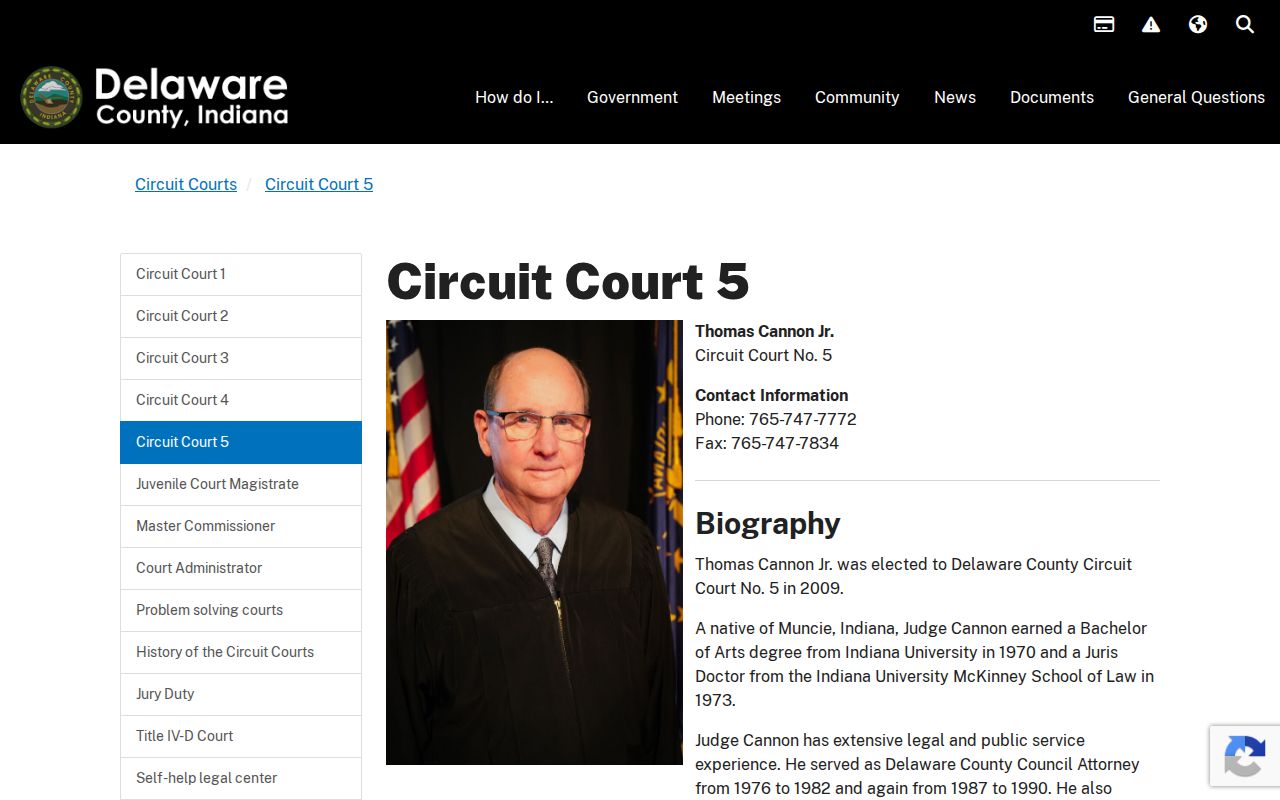
That schedule explains why the assigned court matters more than a guess at the courthouse. Muncie City Court takes eligible local matters filed under 18H01. Federal charges belong to the Southern District of Indiana and never show up in a Delaware County criminal docket.
Clerk Copies and Missing Entries
MyCase warns that online case records can be incomplete. Older matters and documents barred from remote display are the main gaps. Does an event show without a document? Write down the cause number, the date, the title, and the court. Rick Spangler is the Delaware County Clerk. He can be reached at 765-747-7726 or in the clerk office.
Copies run $1 per page, plus $3 per document for certification. A MyCase printout does not become certified just because it displays a court entry. Balances, transcripts, and anything outside online coverage still require the clerk or the court reporter.
A transcript is not the same as a document copy. The CCS confirms a hearing happened. It does not capture what was said there. Give the court reporter the hearing date, the assigned judge, and the cause number. The right office can then quote availability and cost. Filed motions and orders go through the clerk instead. That step keeps a criminal record request from going to the wrong place.
Access Rules for Criminal Dockets
Indiana's Rules on Access to Court Records begin with public access but shield defined data and case types. Juvenile cases, sealed material, expunged records, and protected-person data may be withheld. A missing online match does not mean no case ever existed.
Read absence with care. Confidential, sealed, expunged, and non-Odyssey matter may not display. Ask the clerk about procedure without seeking protected facts.
Expungement falls under Indiana Code chapter 35-38-9. The judiciary's access rules govern court case records mainly, while the Access to Public Records Act reaches agencies more broadly. A court order in a specific case can also restrict access.
Verify Delaware Docket Results
Start by matching the full name, the cause number, and the court. Then compare the date and the case type. Common names call for extra care. One person can have several distinct cases, and related matters often carry separate numbers.
Read status language closely. Pending means the case is still open in some way. Decided or disposed points to a recorded outcome, but the outcome itself shows in the later events. A dismissal, a plea, a trial judgment, and a transfer are different results. Bond and warrant entries can change. The date first shown may be stale, so check the newest public event instead of copying an old line out of context.
Official criminal records have layers. The CCS is the event index. A public filing or order is a document behind that index. An audio record or transcript preserves what was said at a hearing, subject to the court reporter's process. A certified copy comes only from the clerk. Knowing which layer answers the question stops a docket line from being asked to prove more than it can.
Delaware County also assigns court-specific clerk teams. A cause number prefix identifies a division. That division's direct clerk can clarify a setting or a record route. Keep the exact entry date and title handy. Those details help the staff. They can tell a charging document from an amended count, an order from a motion, and a hearing summary from a transcript.
For a current setting, rely on the latest order and call the court clerk. For a disposition, read the later entries rather than the allegations. For a certified record, request the clerk's copy. Those steps keep a Delaware County criminal docket search anchored to the record the court actually maintains.